
Storm-season gutter prep for Flagler County homes is about getting the whole drainage system ready before the summer rain and tropical weather arrive. The county feels a tropical storm or hurricane about every 2.73 years, and even an ordinary Palm Coast summer brings heavy, concentrated rain — September averages 7.67 inches. A gutter system that is clear, correctly pitched and draining away from the house carries that load; one that is clogged or sagging sends it down the walls instead.
Here is a pre-season walkthrough for a Palm Coast home.
Clear the Troughs and Downspouts First
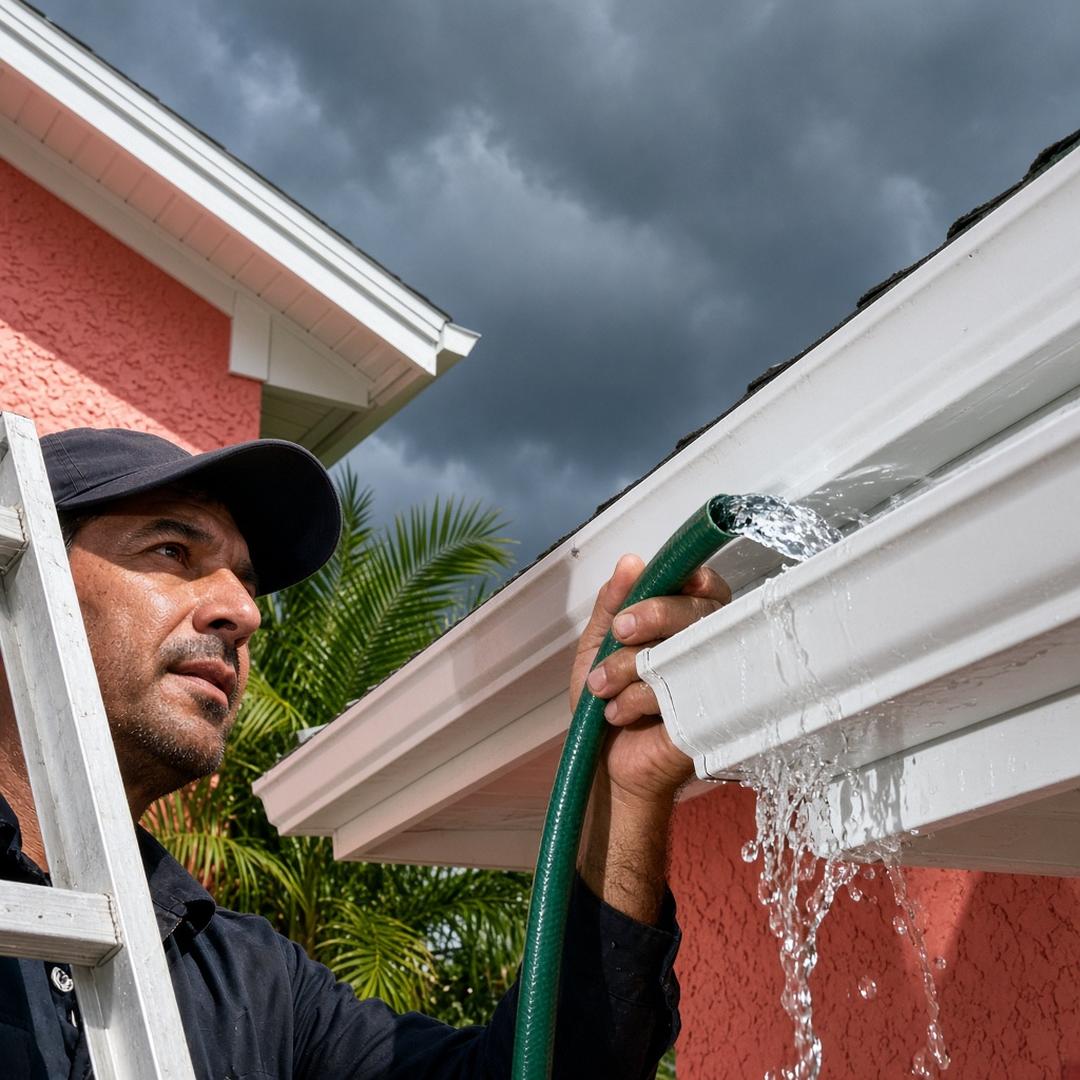
Clearing the troughs and downspouts comes first, because nothing else matters if the system is packed. Pull the needles and leaves from the full length of every run, then flush the troughs with water to move out the fine grit that holds moisture. Check each downspout by running water through it and confirming it flows clear at the bottom — a clog in a downspout elbow backs up the whole run in a storm.
In Palm Coast's canopy sections, this step alone is the difference between a system that drains and one that overflows on the first big rain. If the gutters have not been cleared since before last summer, they are almost certainly due.
Check the Pitch, Hangers and Seams
Checking the pitch, hangers and seams is the second step, and it catches the failures that overflow hides. Watch where water sits after you flush the troughs — standing water means a run has lost its pitch and needs re-hanging. Look for hangers that have pulled loose or spikes backing out of the fascia, since those let a run sag. Check the mitered corners and outlets for seams that weep.
These are the things that quietly fail on the early-2000s gutters common across Palm Coast, and they are far cheaper to fix before a storm than after. Anything beyond a quick reseal is worth a call for gutter repair before the season rather than during it.
Confirm Water Leaves the Foundation
Confirming water leaves the foundation is the final step, because a perfect gutter that dumps at the base of the wall still floods the slab. Follow each downspout to the ground and check that it discharges onto a splash block or into a drain that carries water well away from the house. A downspout that ends right at the foundation should be extended.
Palm Coast lots drain through a managed system of swales and canals, so getting roof water out to where it is meant to go matters here. With the troughs clear, the pitch right, and the downspouts carrying water away, a Flagler County home is ready for whatever the summer brings.